Why Are My Pavers Sinking or Shifting? Common Causes in Florida
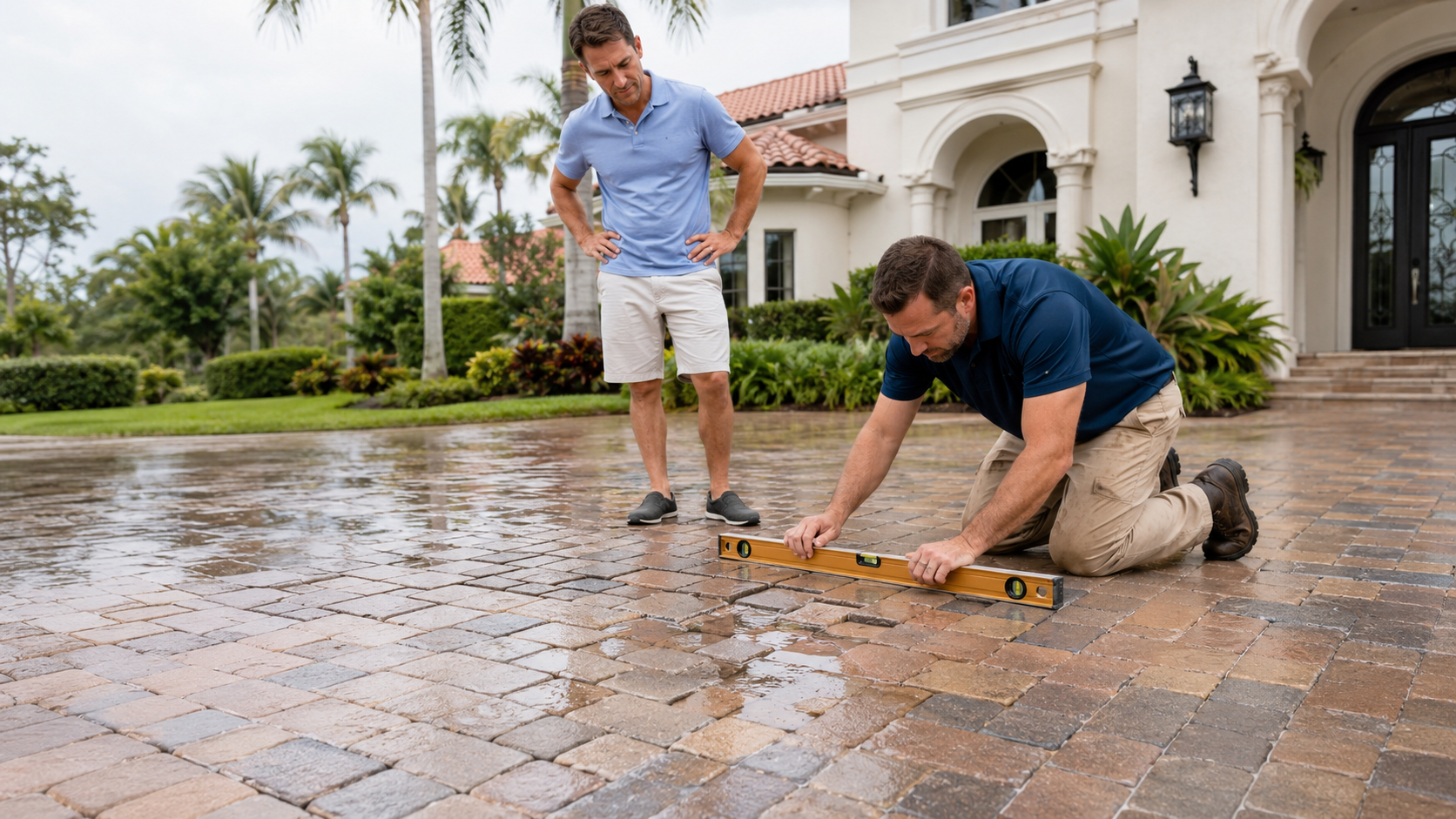
A low spot in the driveway or a loose paver beside the pool may seem minor. Then water collects, edges separate, weeds appear, or someone catches a toe on the uneven surface. Pavers work as an interlocking system, so movement often signals a problem beneath or around the visible units.
Florida’s heavy rain, sandy soils, drainage challenges, tree growth, and year-round outdoor use can contribute. The right repair depends on the cause. Adding sand or replacing one paver may improve the appearance without correcting what made the surface move.
Poor or Uneven Base Preparation
The compacted base distributes loads and supports the pavers. If it is too thin for the intended use, placed over unstable soil, or compacted unevenly, sections can settle at different rates. A driveway carrying vehicles needs different support than a garden path.
Base problems may appear as broad depressions, recurring low spots, or movement along vehicle tracks. Repair can require lifting the affected pavers, rebuilding and compacting the underlying layers, and reinstalling the units at the correct elevation.
Water Erosion and Poor Drainage
Runoff that repeatedly flows across or beneath an installation can carry away bedding or base material. Downspouts, roof valleys, irrigation leaks, clogged drains, and poor grading may concentrate water in one place.
Watch for standing water, washed-out joint sand, soil escaping at the edge, or a low area that worsens after storms. Address the drainage source before resetting pavers, or the repair may settle again.
Loss of Joint Sand
Joint sand helps individual pavers work together. When joints empty because of rain, aggressive pressure washing, traffic, or neglect, pavers may shift laterally. Open joints can also collect debris and weeds.
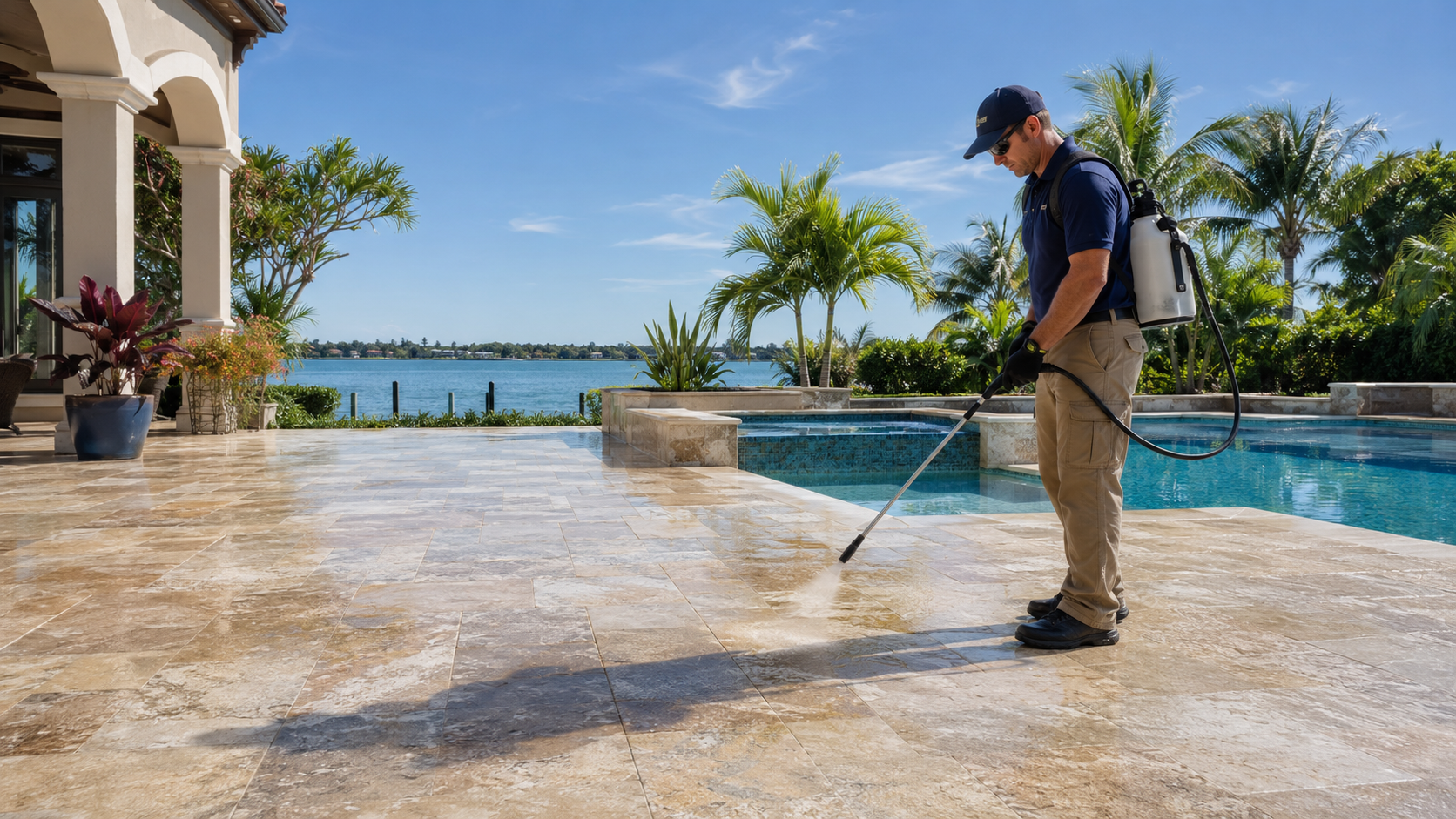
Preferred Pools & Pavers includes joint-sand restoration in its paver cleaning and sealing service. The company replaces unsuitable joint material with fresh, properly graded sand to support stability and appearance.
Missing or Failed Edge Restraints
The outer edge needs support. If an edge restraint is missing, damaged, or no longer anchored, the field can spread outward. Gaps may open while perimeter units rotate or drop.
Landscaping, vehicle tires, equipment, or erosion may disturb an exposed edge. Repairing the boundary before resetting the field helps keep the restored section in place.
Tree Roots and Landscaping
Growing roots can lift pavers, while decaying roots may leave voids that allow sinking. Do not cut major roots without understanding the effect on the plant and surrounding structures. A paver contractor and tree professional may need to coordinate the solution.
Heavy Loads or Repeated Traffic
Movement can occur when the installation carries loads it was not designed for. Delivery trucks, recreational vehicles, dumpsters, construction equipment, or repeated turning can stress a residential driveway or patio edge. The base should be evaluated for the actual load.
Plumbing, Irrigation, or Utility Leaks
An underground leak can wash out support material while leaving few clues above ground. A sudden depression, persistently wet soil, unexplained water use, or movement near a line deserves attention.
Locate and repair the leak before restoring the pavers. Resetting them first can hide the symptom while the washout continues.
How Are Sunken Pavers Repaired?
A professional repair commonly includes:
- Inspecting the pattern and identifying the likely cause
- Removing affected pavers without unnecessary damage
- Correcting drainage, leaks, edges, or unstable material
- Rebuilding and compacting the base to the proper elevation
- Reinstalling and aligning reusable or replacement pavers
- Restoring joint sand and completing final compaction
- Cleaning the area and checking transitions for trip hazards
The repair area depends on how far the underlying problem extends. Adjacent pavers may need adjustment so the finished surface transitions smoothly.
Can Cleaning and Sealing Fix Sinking Pavers?
Cleaning and sealing can improve appearance, protect the surface, and support joint maintenance, but sealer cannot rebuild a failed base or correct drainage. Loose or damaged areas should be repaired first.
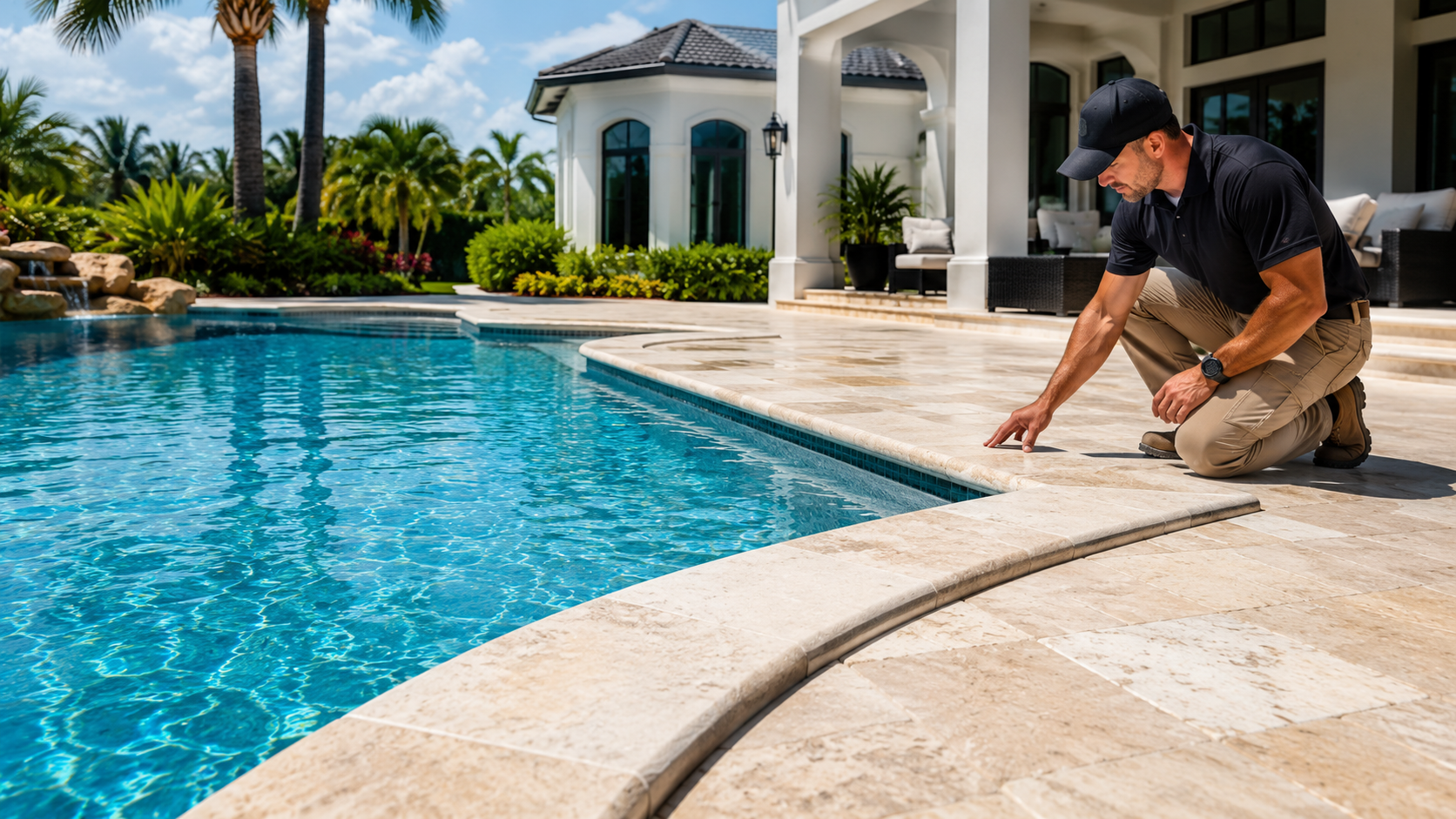
Preferred Pools & Pavers describes a restoration process that starts with assessment and deep cleaning, addresses loose or damaged pavers and joint sand, then applies a sealer selected for the surface and desired appearance.
When Should You Call a Professional?
Request an assessment when movement creates a trip hazard, affects drainage, returns after repair, spreads across a driveway, or appears near a pool, foundation, drain, or utility line. Prompt attention may help limit the disturbed area.
Contact Preferred Pools & Pavers for a Sarasota County paver assessment and project-specific estimate. The team can evaluate the surface and explain whether resetting, joint restoration, cleaning, sealing, or a broader correction is appropriate.
Schedule your free consultation today.
Call us or use our online form to request your no-obligation estimate.