Pool Deck Ideas: Travertine, Pavers and Concrete Compared for Florida Pools
Choosing the right pool deck material in Sarasota comes down to three factors: heat resistance, durability in Florida's climate, and long-term maintenance requirements. Travertine consistently outperforms poured concrete on all three counts because it stays cooler underfoot, handles rainfall and UV exposure without surface degradation, and can be replaced panel by panel if individual pieces are ever damaged. Concrete pavers offer a similar performance advantage over poured concrete at a lower price point, while poured concrete remains a budget starting point with more limitations in Florida's demanding conditions.
Your pool deck is one of the most used surfaces in your home. It gets barefoot traffic in 90-degree heat, contact with pool chemicals, constant sun exposure, and the freeze-thaw-free but still highly variable temperature swings of a Florida climate. The material you choose for your pool deck will either hold up beautifully for decades or begin showing stress and deterioration within a few years of installation.
At Preferred Pools and Pavers in Sarasota, we have worked with all three major pool deck materials across hundreds of installations. This guide gives you an honest comparison so you can make the right choice for your home, your budget, and the look you are after.
What Makes a Great Pool Deck in Florida?
Florida pools operate in conditions that would challenge almost any surface material. The sun here is intense. The rain arrives in daily afternoon storms during summer. Salt air near the coast accelerates surface degradation. Bare feet, wet skin, and pool chemicals are constants from May through October and beyond.
A great Florida pool deck must check all of these boxes. It needs to stay cool enough to walk on barefoot in peak afternoon sun. It needs a textured or slightly rough surface for grip when wet, because a slippery pool deck is a safety issue. It needs to handle standing water and drain properly without pooling. And it needs to look as good in year ten as it did when it was installed, without requiring excessive maintenance to get there.
The 3 Main Pool Deck Material Options
Travertine Pool Deck
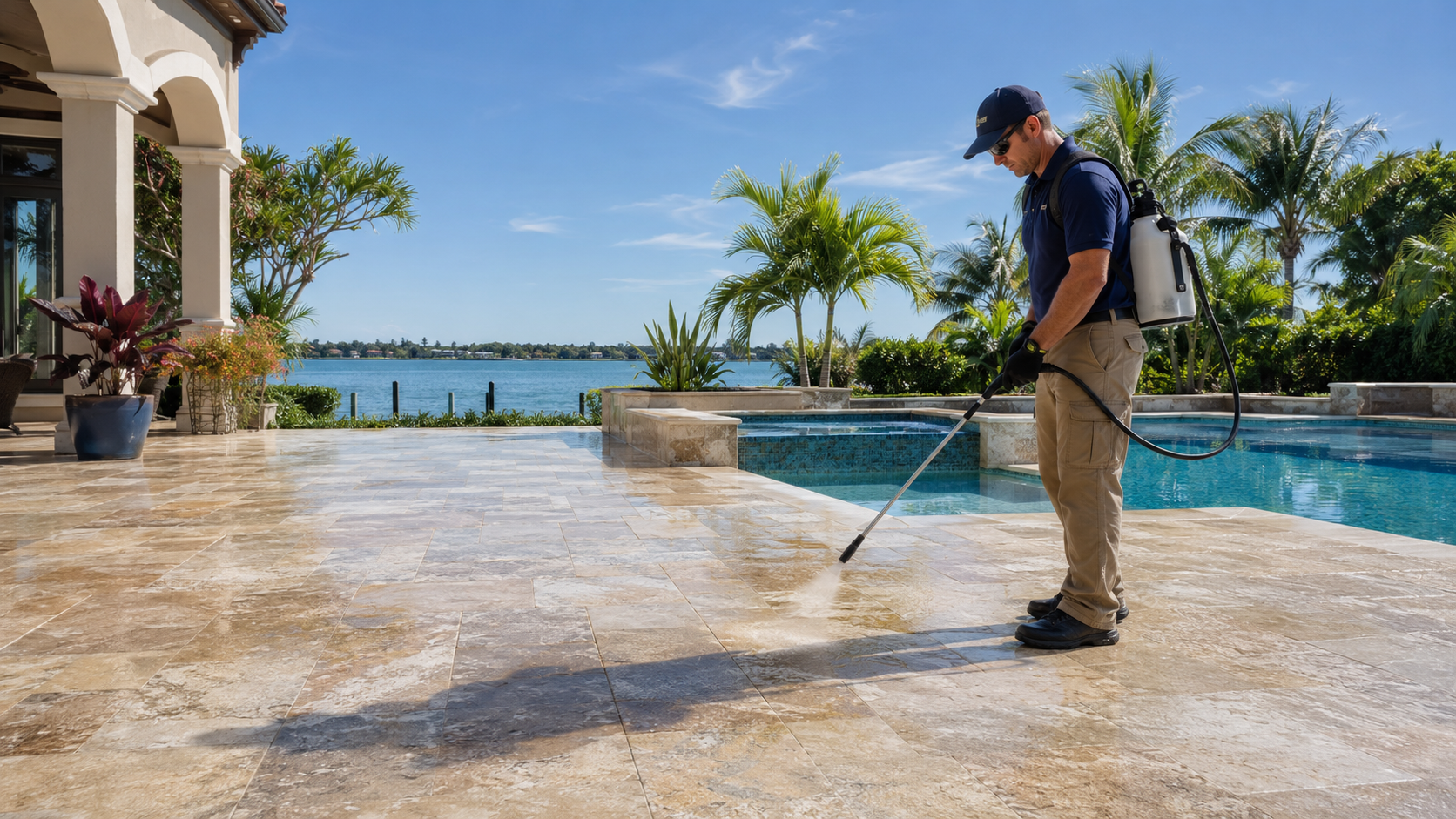
Travertine is a natural limestone formed near natural springs and hot springs. Its slightly porous, open-cell surface structure is the key to its standout performance as a Florida pool deck material. Because travertine does not conduct heat the same way dense materials like concrete do, it stays measurably cooler underfoot even after hours of direct sun exposure. Walk across a travertine deck and then a concrete deck on a hot July afternoon and you will feel the difference immediately.
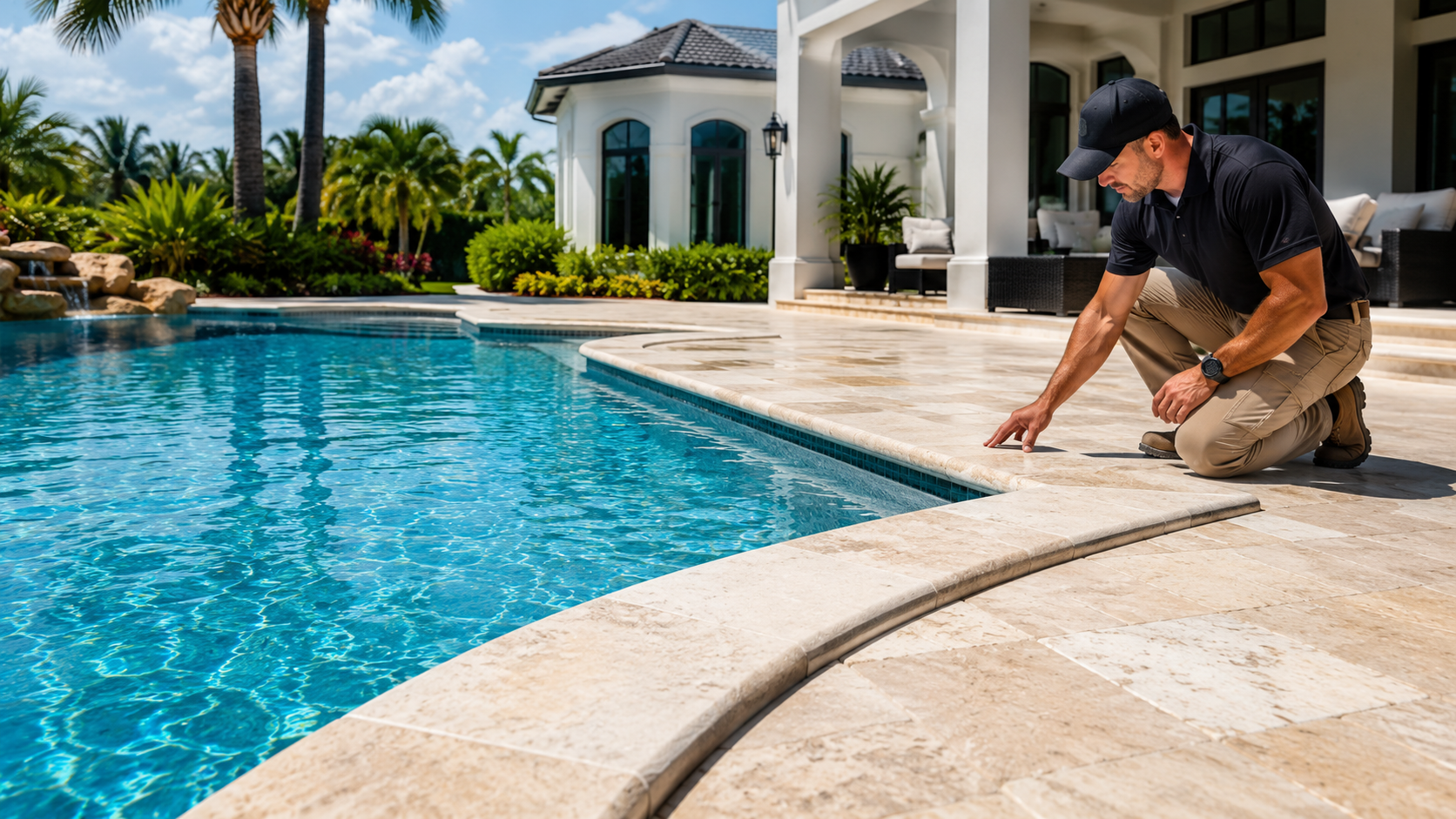
Travertine also has a natural non-slip texture that provides grip when wet, which is a critical safety consideration for pool surrounds. Available in ivory, walnut, gold, and silver tones, travertine suits both Mediterranean-inspired and contemporary pool designs. It requires sealing every two to three years in Florida's climate to protect against staining and to maintain its finish, but a properly sealed and maintained travertine deck can last 30 to 50 years or more.
Concrete Pavers Pool Deck
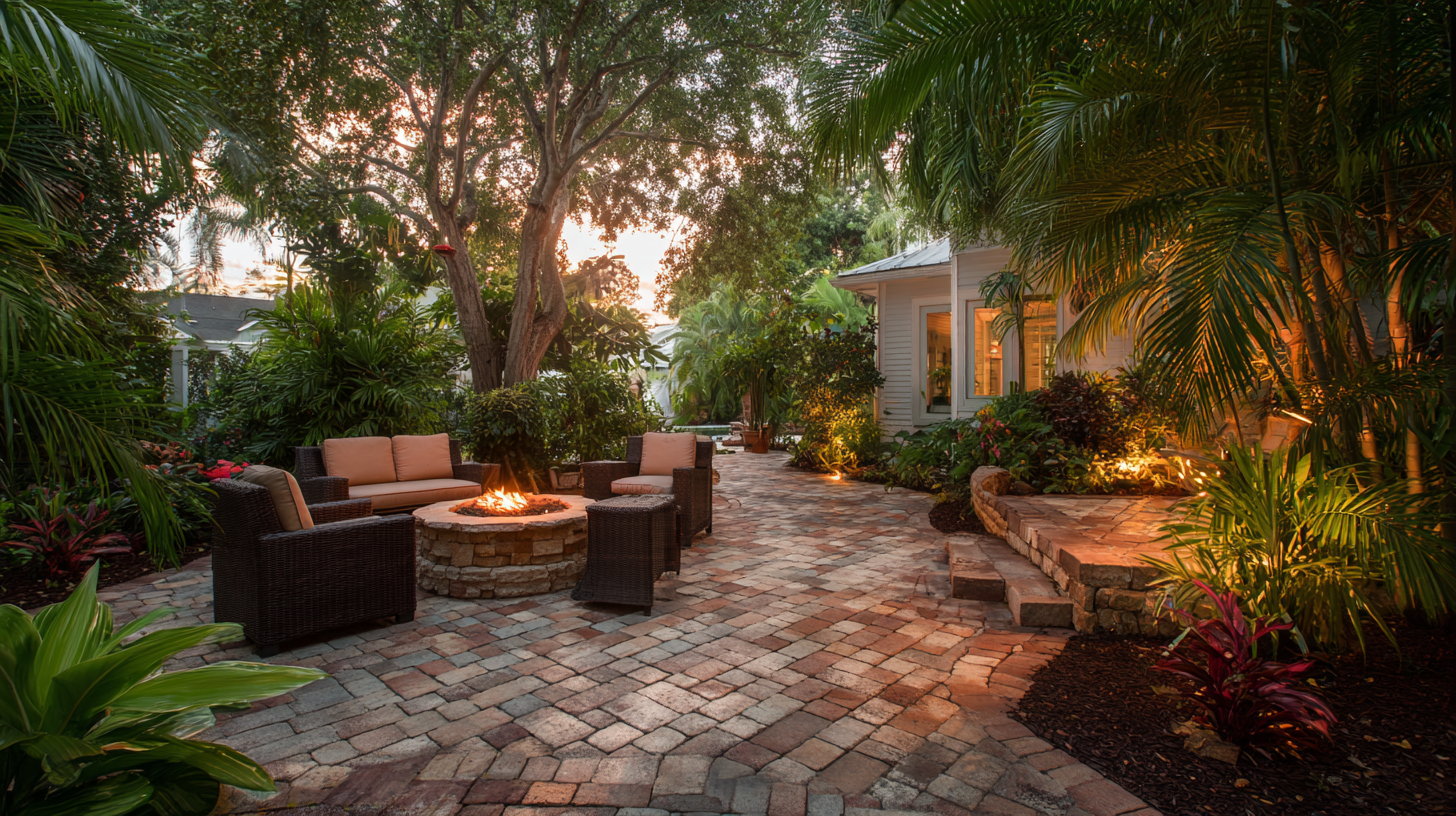
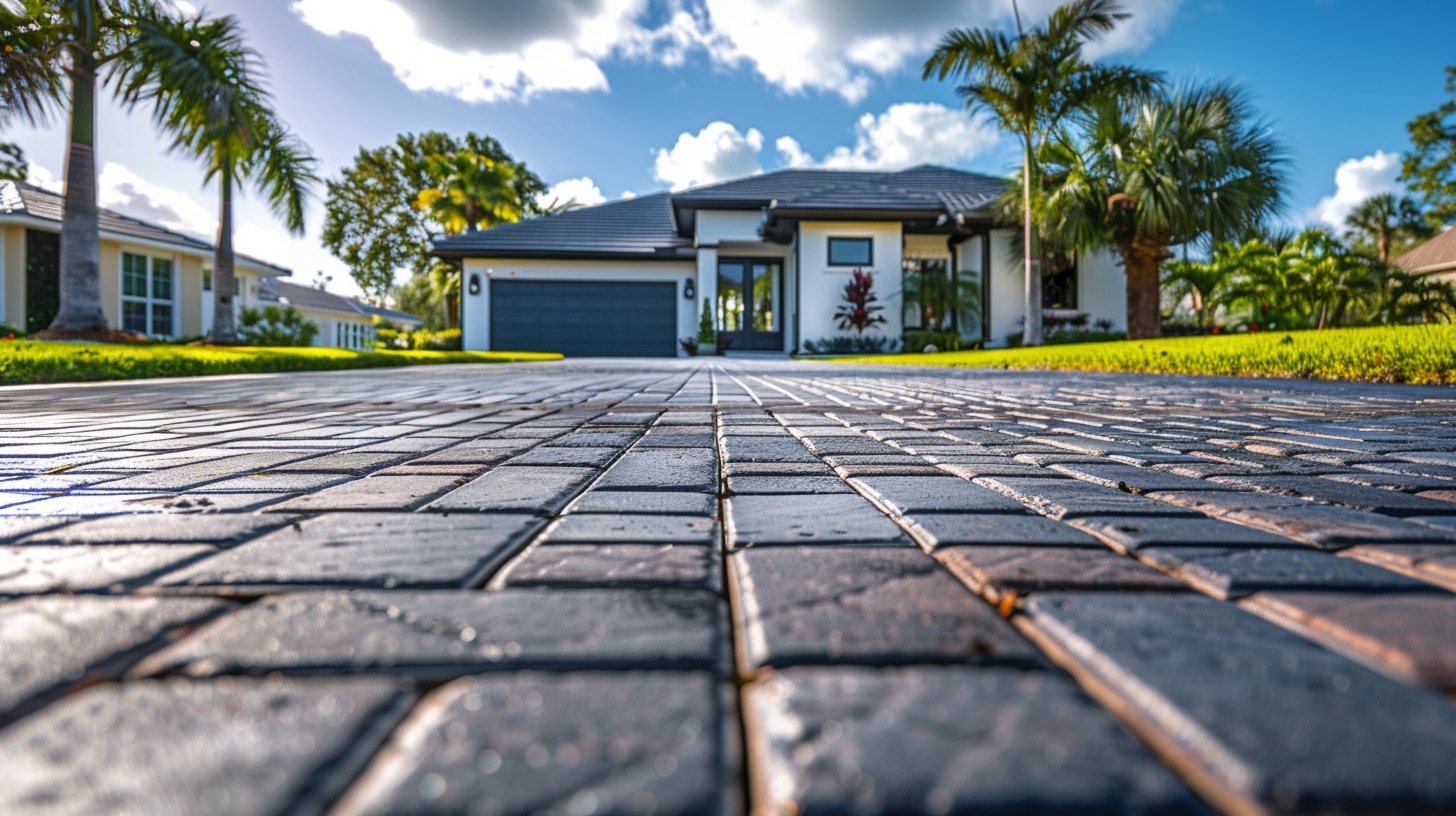
Concrete pavers manufactured specifically for pool deck applications offer a compelling middle-ground option. They are more affordable than natural stone travertine, available in a huge range of colors, sizes, and textures, and they perform significantly better than poured concrete in Florida's climate. Like travertine, individual concrete pavers can be removed and replaced if a single unit cracks or is damaged, which eliminates one of the biggest frustrations of poured concrete maintenance.
Concrete pavers are denser than travertine and can get warmer underfoot in direct sun, though tumbled or textured finishes and lighter color choices minimize this. They provide good slip resistance when properly selected and are a practical choice for homeowners who want a durable, attractive pool deck at a price point below natural stone.
Poured Concrete Pool Deck
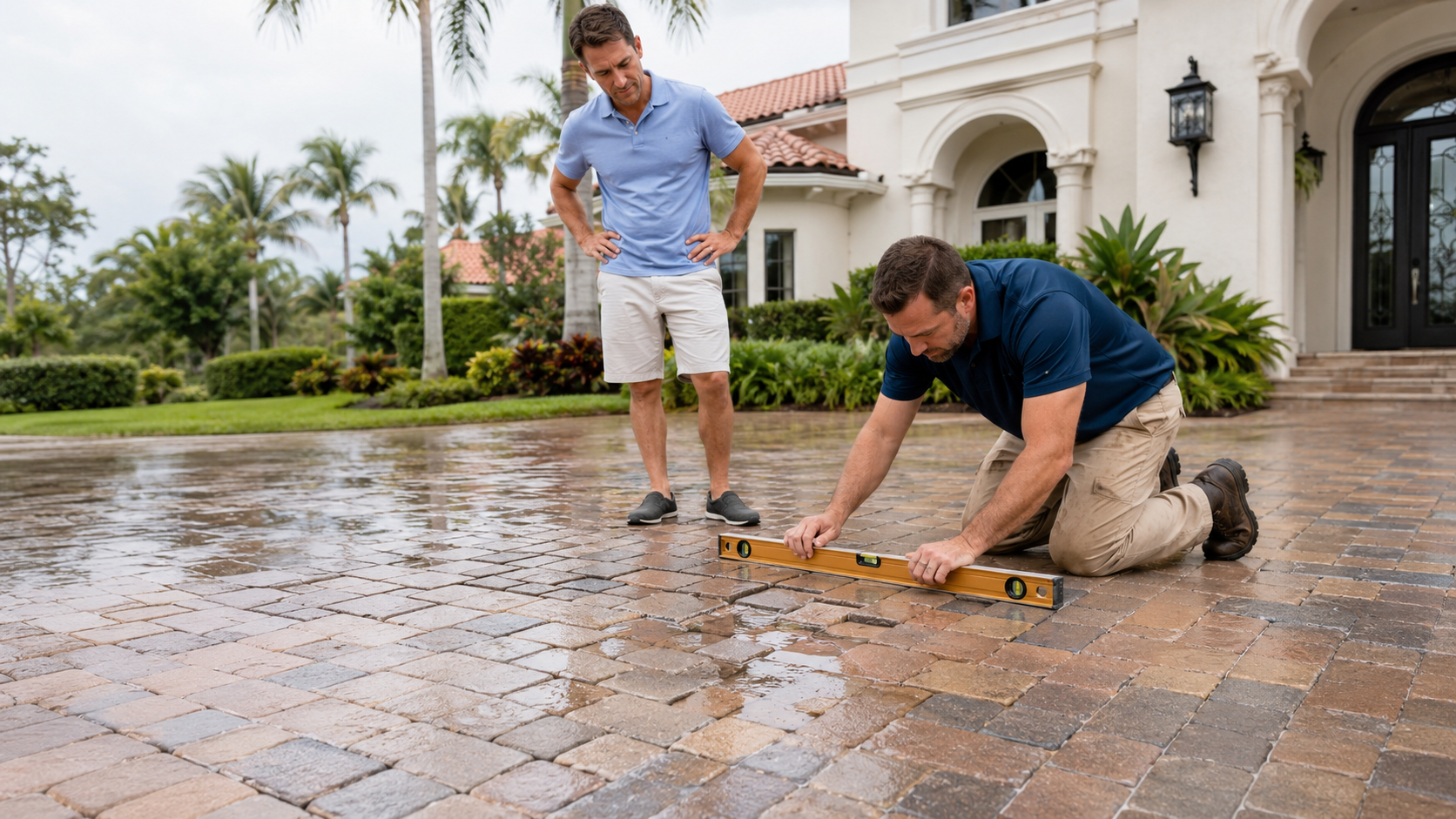
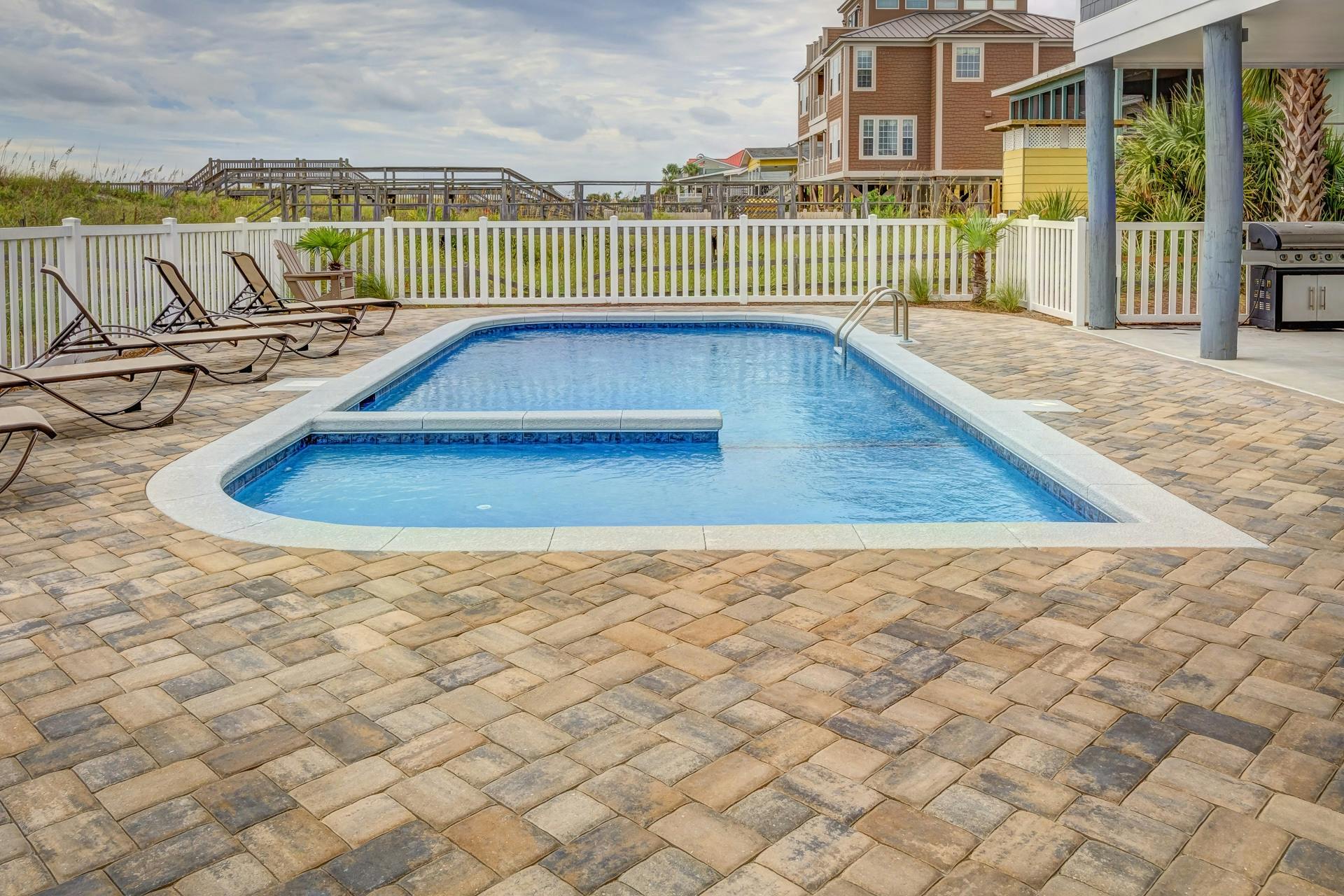
Poured concrete is the most common pool deck material across Florida for one reason: it is the least expensive option upfront. However, the long-term cost picture is less favorable than it appears at the point of installation. Poured concrete absorbs heat, making it uncomfortable or even painful to walk across barefoot in the Florida summer sun. It cracks over time due to ground movement, root pressure, and thermal expansion, and once it cracks, repair options are limited to patching (which is visible) or full removal and replacement (which is expensive).
For homeowners with an existing poured concrete deck who want to upgrade without full demolition, installing concrete pavers or travertine over the existing slab is a viable option that we cover in the resurfacing section below.
Side-by-Side Comparison: Travertine vs Pavers vs Concrete
Pool Deck Design Ideas by Style
Modern Minimalist Pool Deck
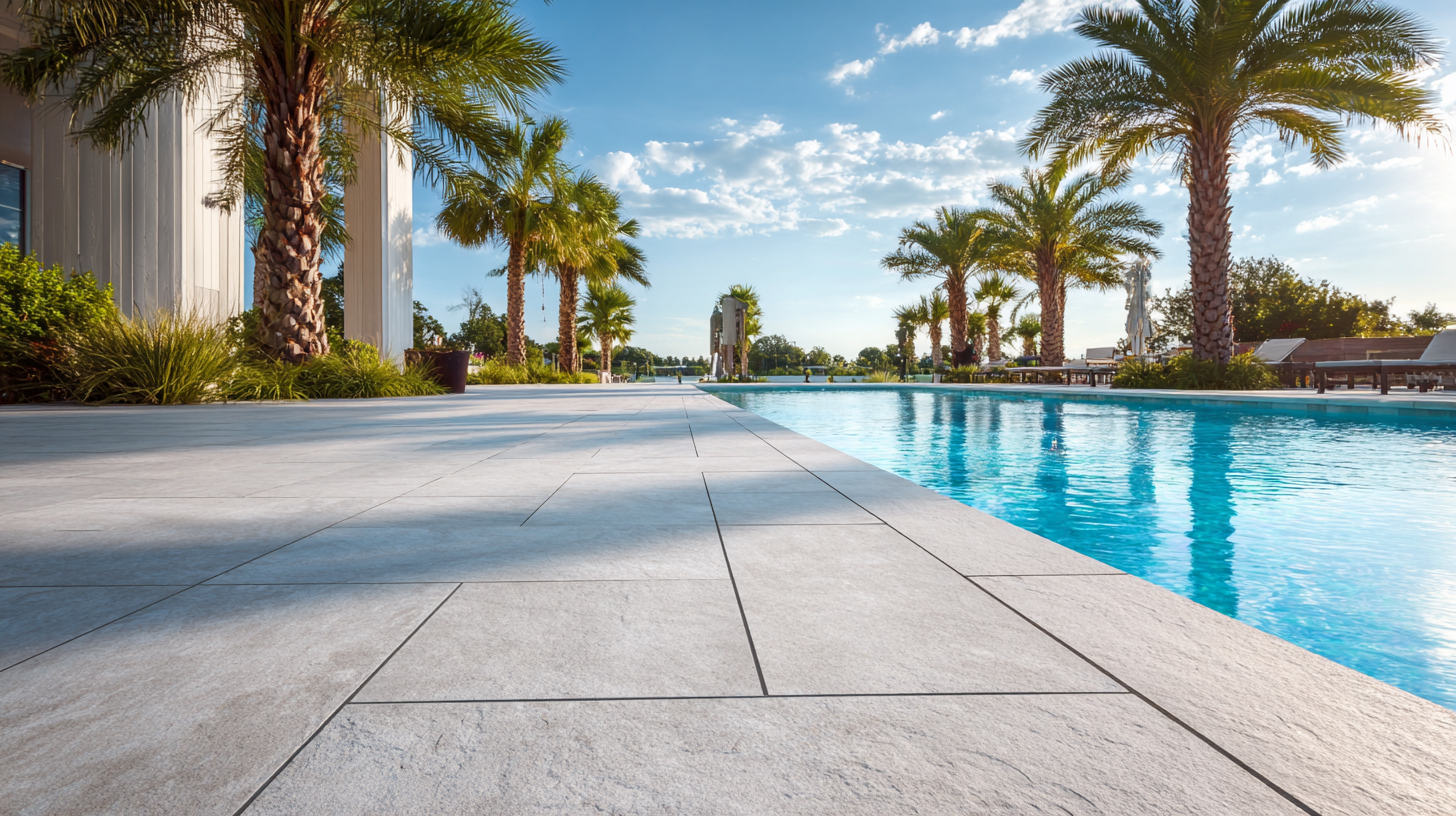
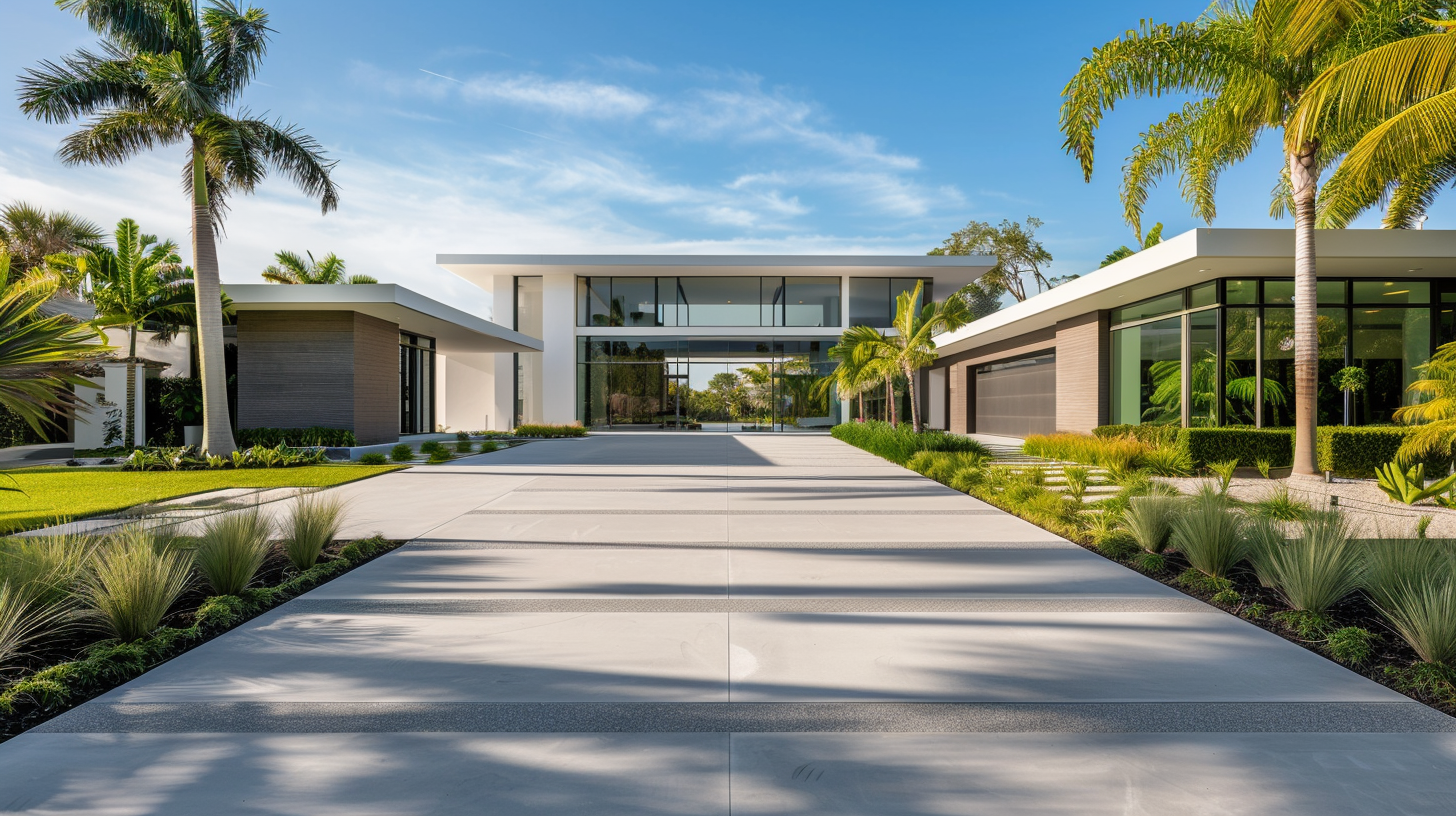
A modern pool deck is defined by clean geometry, limited color palette, and material consistency. Large-format travertine tiles or oversized concrete pavers in a light gray or ivory tone, laid in a straight grid pattern with tight joints, create the foundation for this aesthetic. The deck surface should flow without interruption to the pool coping edge, eliminating visual breaks that would disrupt the clean lines. Frameless glass pool fencing, minimal plantings in architectural pots, and concealed outdoor lighting complete the look. This design is particularly effective for rectangular lap pools and homes with contemporary architecture.
Mediterranean and Coastal Pool Deck
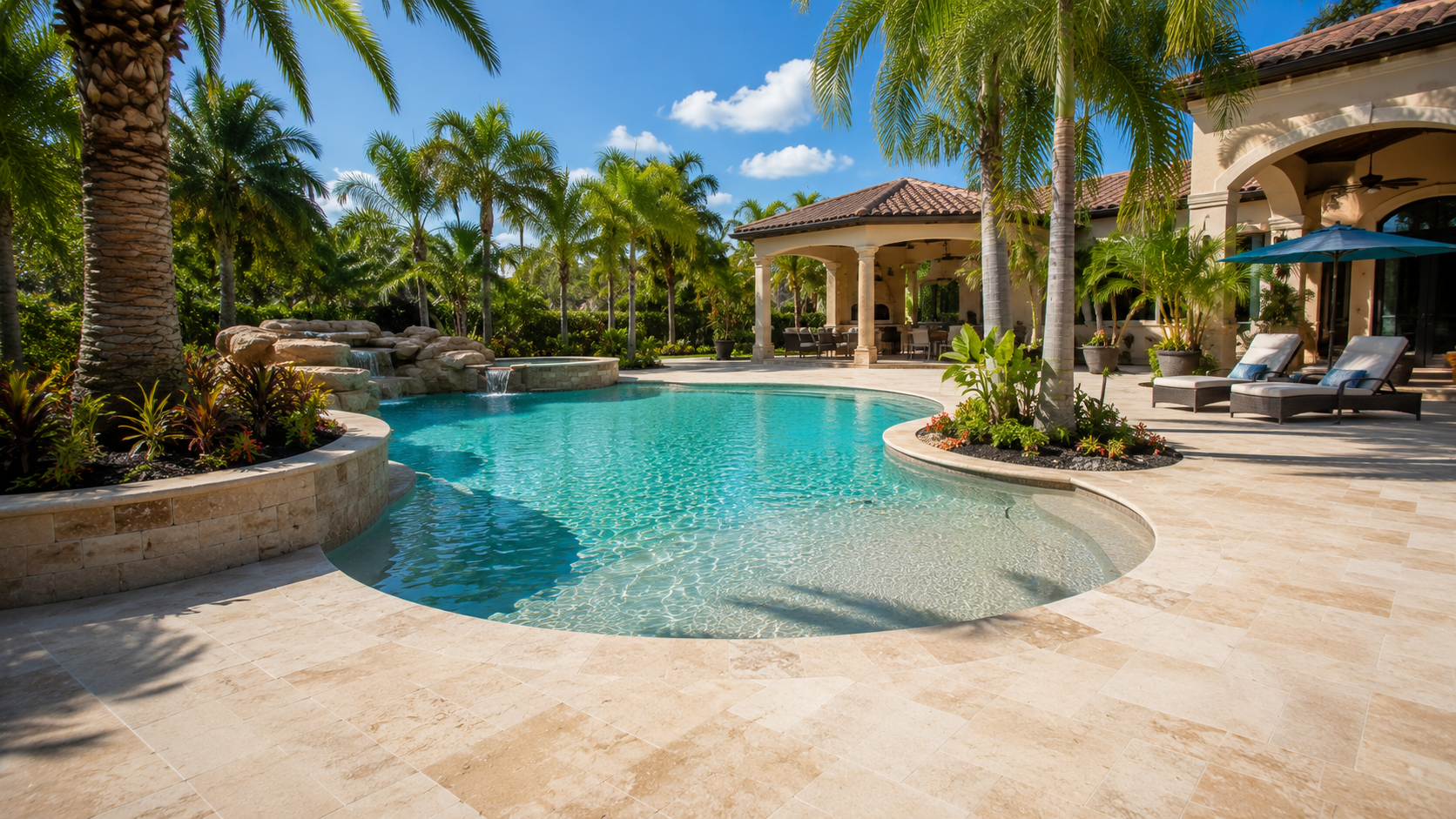
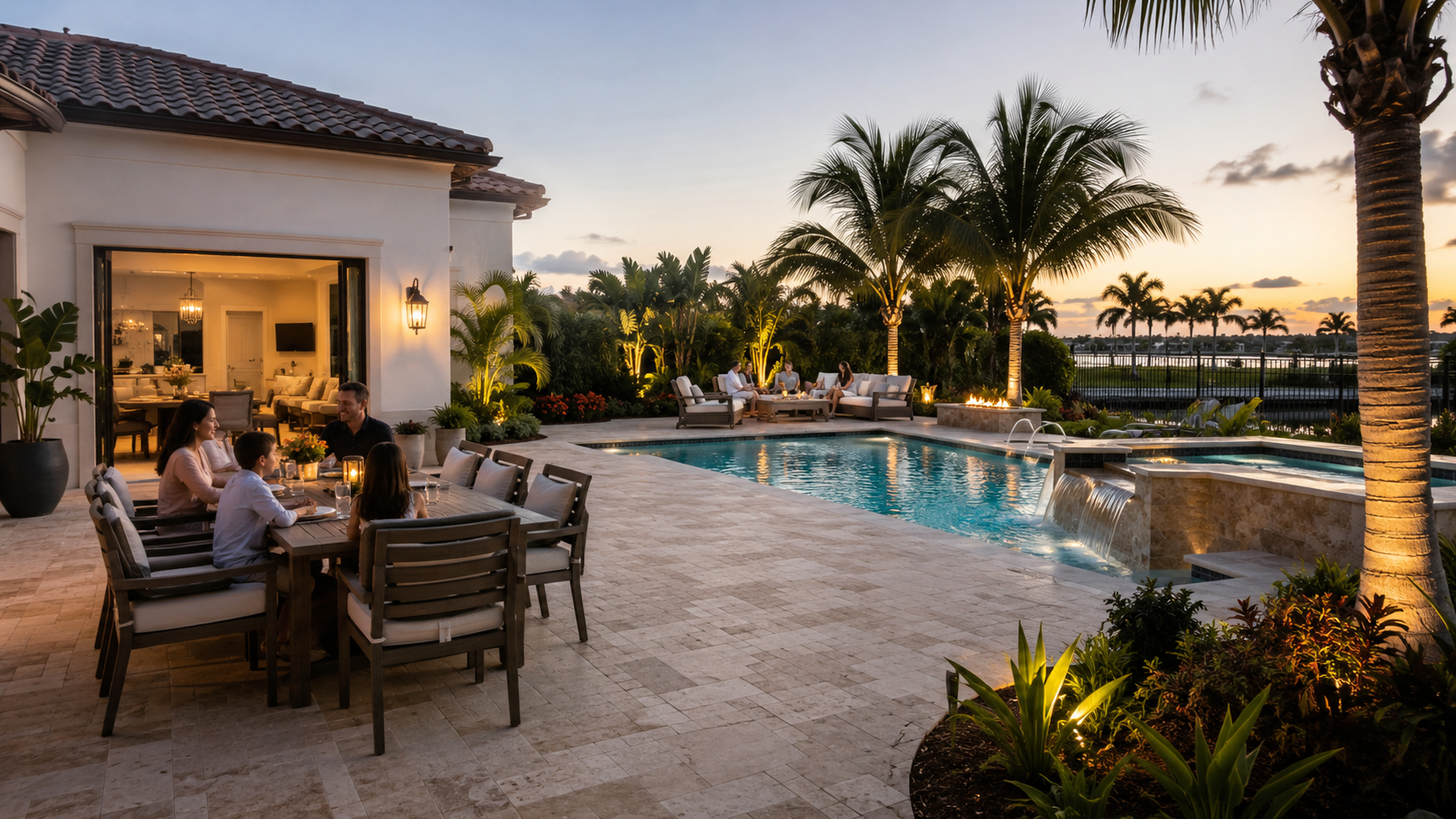
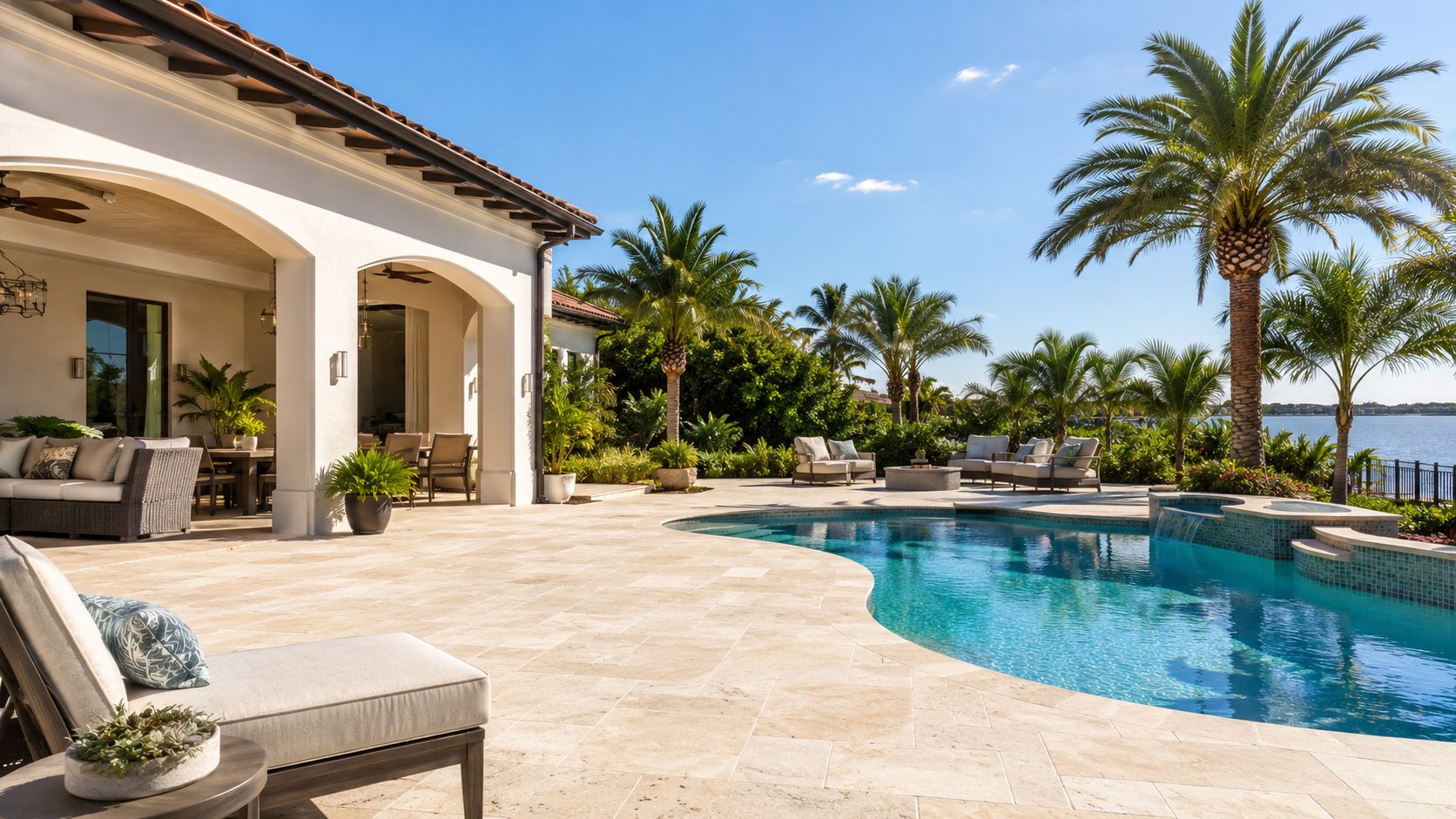
Sarasota's Gulf Coast setting makes the Mediterranean aesthetic a natural fit for pool deck design. Travertine is the essential material for this style, ideally in a French pattern or Versailles pattern that combines multiple tile sizes for visual richness. Ivory and walnut travertine tones complement the warm Florida light beautifully and pair well with terracotta accents, tropical plantings, and natural stone pool coping. The slight variation in color that comes with natural travertine adds authenticity and character that manufactured materials cannot replicate. This style ages gracefully and actually improves in appearance as the stone develops a natural patina over time.
Resort-Style Pool Deck in Sarasota
A resort-style pool deck creates a backyard that feels like a luxury hotel property. The defining characteristics are generous space allocation, defined zones for lounging and dining, premium material throughout, and thoughtful details like waterfall features, outdoor kitchen integration, and layered landscape design. Travertine is the dominant material in most resort-style installations because it delivers the premium visual quality that makes this design feel authentic. If your goal is a backyard that people walk into and immediately say they feel like they are on vacation, investing in a resort-quality pool deck design is the way to achieve it.
Pool Deck Resurfacing: Can I Install Pavers Over Existing Concrete?
One of the most common questions we receive from Sarasota homeowners with aging pool decks is whether they can install new pavers directly over their existing poured concrete rather than demolishing and starting from scratch. The answer is yes, in many cases, and it can significantly reduce the cost and disruption of a pool deck upgrade.
Installing travertine or concrete pavers over an existing concrete deck requires that the existing slab be structurally sound, properly sloped for drainage, and within acceptable height parameters. We assess the existing deck before recommending this approach, because a deteriorated or improperly sloped base will cause problems regardless of what surface material is installed over it. When the conditions are right, an overlay installation can deliver a beautifully upgraded pool deck in less time and at a lower overall cost than full demolition.
Frequently Asked Questions
Q: Is travertine or pavers better for a pool deck in Florida?
A: Travertine is generally the top choice for Florida pool decks because of its natural heat-resistance, non-slip texture, and aesthetic appeal. Concrete pavers are a strong alternative at a lower price point. Both significantly outperform poured concrete in Florida's climate for comfort, safety, and long-term durability.
Q: How much does a pool deck cost in Sarasota?
A: Pool deck installation in Sarasota typically ranges from $12 to $28 per square foot installed, depending on material choice, deck size, and preparation requirements. A standard 800 square foot pool deck in travertine would generally fall in the $14,400 to $22,400 range. Contact us for a free site assessment and detailed quote.
Q: How do I keep my pool deck cool in Florida?
A: Choosing a light-colored, porous material like travertine is the most effective strategy for keeping a Florida pool deck cool underfoot. Travertine's open-cell structure prevents it from absorbing and radiating heat the way dense concrete does. Light-colored concrete pavers in a textured finish are the next best option. Avoid dark-colored materials and smooth, dense concrete in full-sun pool deck applications.
Q: Can you put pavers over an existing pool deck?
A: Yes, in many cases travertine or concrete pavers can be installed over an existing concrete pool deck, which avoids the cost and disruption of full demolition. The existing slab must be structurally sound, properly sloped for drainage, and at an appropriate height for the overlay. We assess every project before recommending this approach to ensure a quality result.
Get a Free Pool Deck Quote in Sarasota
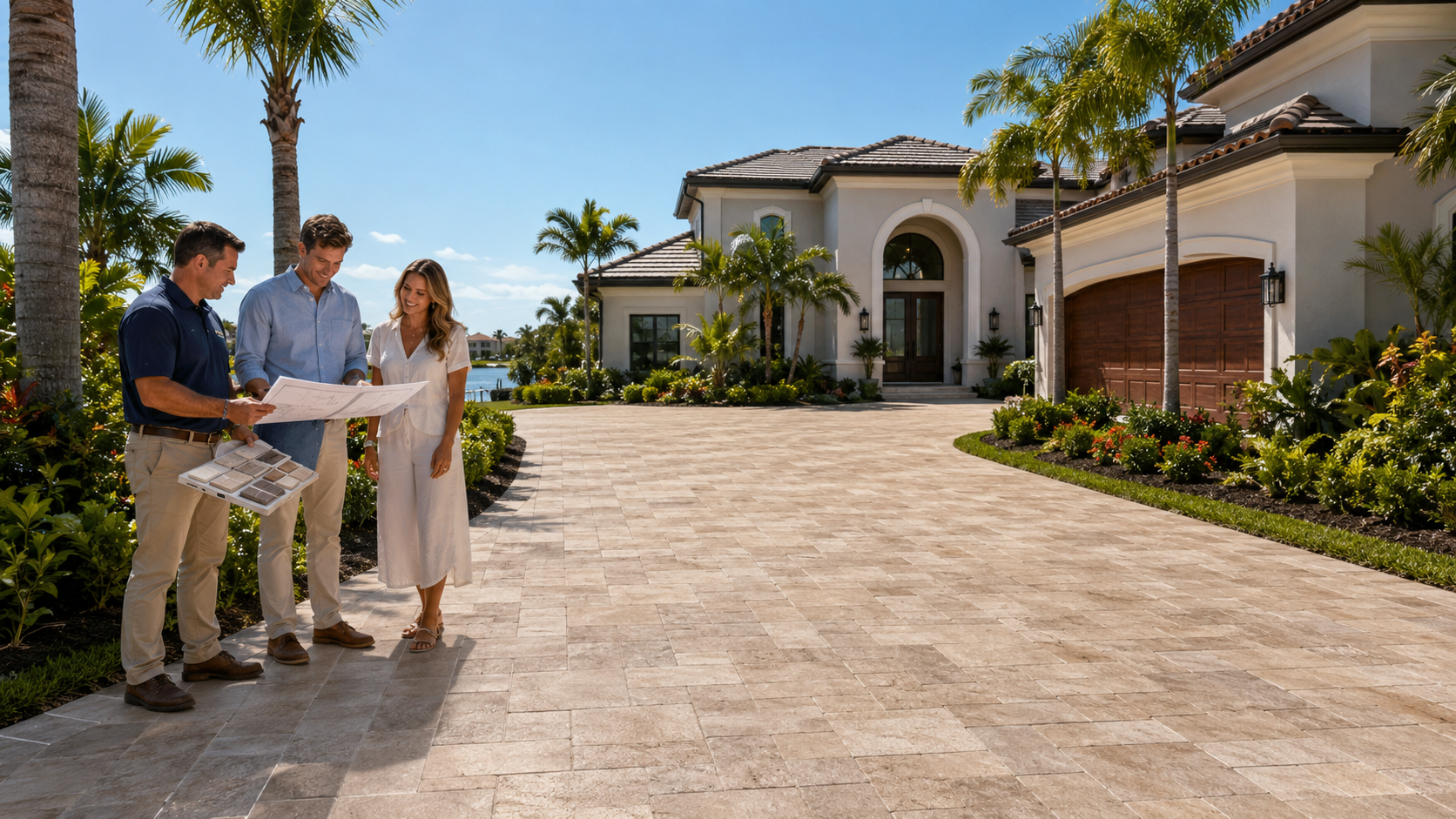
Preferred Pools and Pavers has been installing and transforming pool decks across Sarasota and the Gulf Coast for years. Whether you are starting from scratch or upgrading an existing surface, we bring the material knowledge, design expertise, and installation precision to deliver a pool deck that performs beautifully and looks great for decades.
Schedule your free consultation today.
Call us or use our online form to request your no-obligation estimate.