How to Seal Pavers: A Florida Homeowner's Complete Guide
Sealing pavers in Florida requires a penetrating or impregnating sealer applied to a clean, fully dry surface, ideally in dry weather when temperatures are between 50 and 90 degrees Fahrenheit. In Florida's climate, most natural stone and concrete pavers should be resealed every two to three years to protect against staining, UV discoloration, and moisture intrusion. Topical or film-forming sealers are generally not recommended for pool decks and high-traffic outdoor surfaces in Florida because they can become slippery when wet and tend to peel in high-heat, high-UV conditions.
If you own a paver patio, pool deck, or driveway in Sarasota, sealing is not optional. Florida's combination of intense UV radiation, frequent rainfall, high humidity, and year-round organic debris creates conditions that attack unsealed pavers faster than almost any other climate in the country. Leaves, algae, pool chemicals, sunscreen, food spills, and lawn chemicals all penetrate unsealed stone or concrete and cause staining and deterioration that becomes very difficult to reverse once established.
At Preferred Pools and Pavers, we seal pavers as part of new installations and as a standalone service for existing surfaces across Sarasota, Bradenton, and Venice. This guide gives you the complete picture on how paver sealing works in Florida's climate, the steps involved, and when it makes more sense to call a professional than to take on the project yourself.
Why Sealing Pavers Matters in Florida's Climate
Florida is one of the most demanding environments for outdoor paving materials in the US. The average Sarasota homeowner deals with approximately 55 inches of annual rainfall, UV index readings that regularly reach 11 or higher in summer, afternoon thunderstorms from June through September, and a combination of salt air and organic matter from tropical landscaping that creates constant surface pressure on any unsealed paver material.
Unsealed travertine will develop dark staining from tannins in fallen leaves within a single wet season. Unsealed concrete pavers absorb oil and organic stains quickly and are significantly harder to clean once staining has penetrated the surface. Unsealed pavers around pool decks are at particular risk from chlorine splash and sunscreen, both of which leave visible discoloration on natural stone if not sealed and cleaned regularly.
Sealing creates a protective barrier that keeps staining agents on the surface where they can be washed away rather than allowing them to penetrate the material. A properly sealed surface also resists algae and mold growth, which is a real concern on shaded or damp paver surfaces in Florida.
How Often Should You Seal Pavers in Florida?
The general recommendation for resealing pavers in Florida is every two to three years for penetrating sealers on natural stone and concrete pavers. High-traffic areas, pool deck surfaces that receive heavy sunscreen and chemical exposure, and surfaces exposed to full sun year-round may benefit from resealing every two years. Lower-traffic patios in partially shaded locations can often go three years between applications.
The clearest sign that resealing is needed is when water no longer beads on the surface. A properly sealed paver will cause water to bead and roll off, similar to a freshly waxed car. When water soaks in immediately instead of beading, the sealer has worn through and the surface is unprotected. You may also notice the pavers beginning to look dull or faded compared to their original color, which is another sign the sealer has degraded.
Choosing the Right Paver Sealer
The type of sealer you choose is as important as the application process itself, and this is an area where homeowners commonly make mistakes that result in costly problems. Florida's climate calls for specific sealer types, and some products marketed for general paver use are actually a poor fit for outdoor pool deck and patio applications in our conditions.
Penetrating (Impregnating) Sealers
Penetrating sealers, also called impregnating sealers, soak into the paver material and bond with the mineral structure below the surface rather than forming a film on top. This is the most appropriate sealer type for pool decks, outdoor patios, and driveways in Florida. Because penetrating sealers do not form a surface film, they cannot peel, bubble, or become slippery when wet. They maintain the natural look and texture of the paver surface while providing strong protection against staining and moisture intrusion. They are available in both wet-look formulations that enhance the natural color of the stone and natural-look formulations that leave the surface appearing unchanged.
Topical or Film-Forming Sealers
Topical sealers form a visible coating on the surface of the paver. They are sometimes marketed as providing a higher-gloss, more protected finish. However, for pool decks and outdoor patios in Florida, topical sealers are generally the wrong choice. They create a slippery surface when wet, which is a serious safety risk on a pool deck. They are also prone to peeling, bubbling, and delaminating in Florida's heat and UV exposure, particularly on surfaces that get direct afternoon sun. When a topical sealer begins to fail, it must be stripped completely before a new sealer can be applied, which adds significant time and cost to the maintenance process.
Colour-Enhancing Sealers
Colour-enhancing or wet-look sealers are a category of penetrating sealer that deepens and enriches the natural tone of the paver material while still providing full protection. These are popular on travertine in ivory and walnut tones because they bring out the warmth and variation in the stone beautifully. They are a great choice when you want your patio or pool deck to look as rich and saturated as possible while maintaining the safety and durability benefits of a penetrating formula.
How to Seal Pavers: Step-by-Step
If you have a smaller paver surface in good condition and want to attempt sealing yourself, here is the process used by professionals. Keep in mind that the preparation steps are just as critical as the sealer application. Sealing over a dirty or incompletely dry surface will trap contaminants under the sealer and deliver a result that looks poor and fails early.
Step 1: Clean the Surface
Begin with a thorough cleaning of the entire paver surface. Use a pressure washer at appropriate pressure for your paver type, combined with a surface cleaner attachment for even results. For travertine, use lower pressure than you would for concrete pavers to avoid etching the softer stone. Apply a paver-specific cleaning solution to address any organic staining, efflorescence (white salt deposits), or oil spots before rinsing. Allow the cleaning solution to dwell for the manufacturer's recommended time before rinsing completely. All joint sand should be intact and settled before proceeding.
Step 2: Let the Pavers Dry Completely
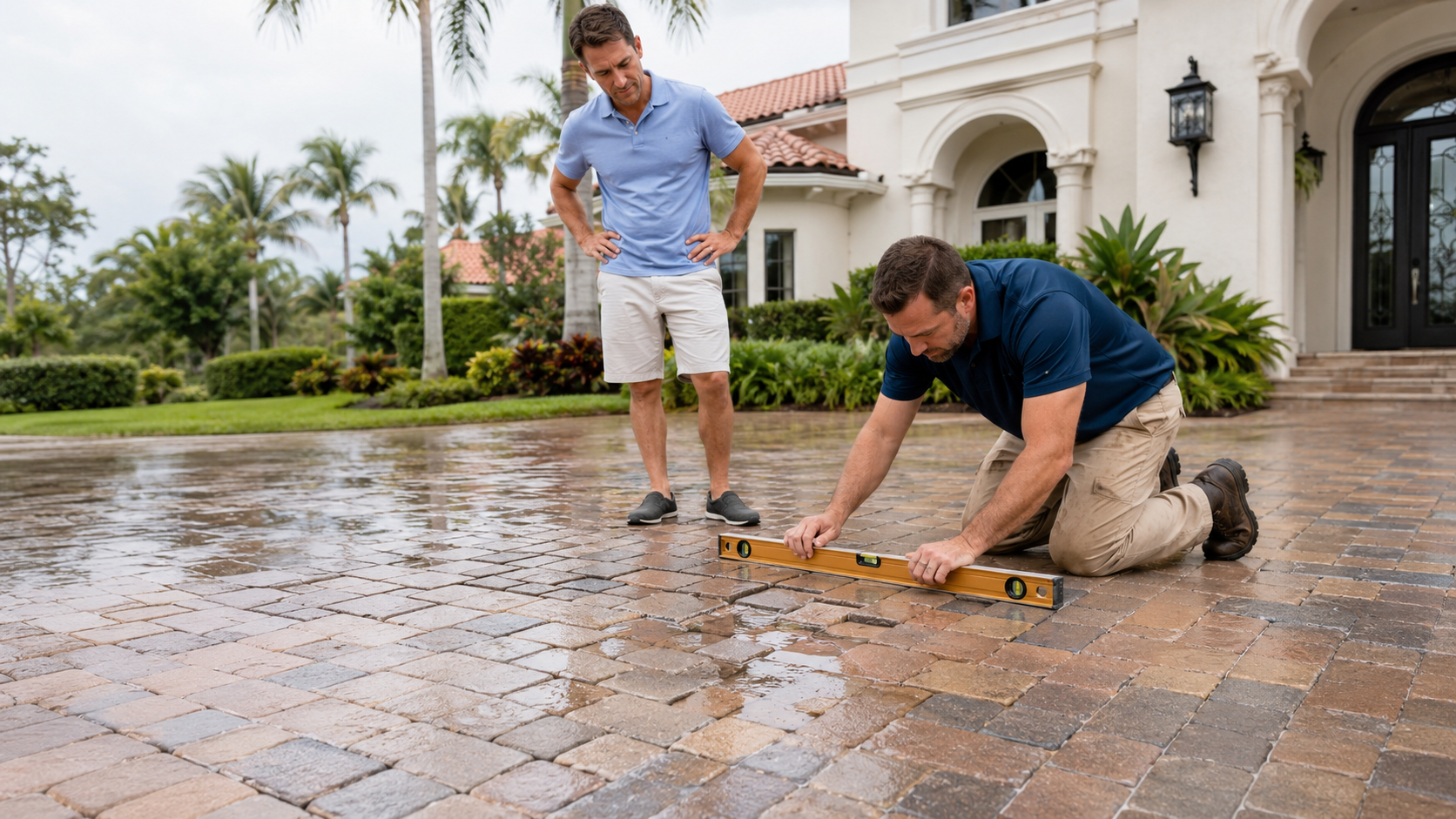
This step is where many homeowners rush the process and create problems. Pavers must be completely dry before sealer application, which in Florida's humid climate takes longer than it might seem. After washing, allow a minimum of 24 to 48 hours of dry weather before applying sealer. Check not just the surface but also the joints and any shaded areas, which retain moisture longer. Applying sealer over even slightly damp stone will cause clouding, discoloration, or adhesion failure. If rain is forecast within 24 hours of your planned application day, postpone.
Step 3: Apply the Sealer
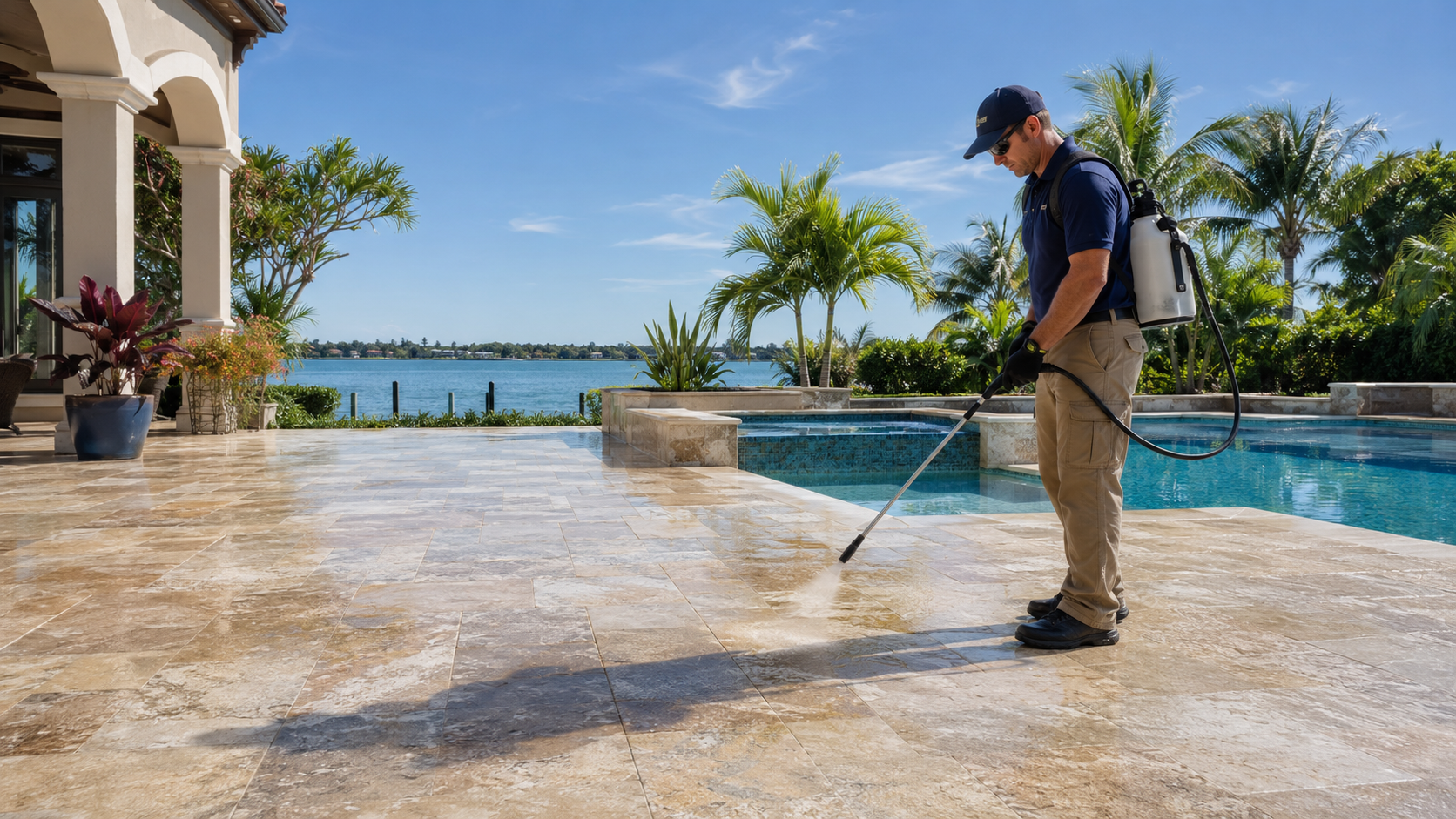
Apply your penetrating sealer using a low-pressure sprayer or a paint roller with a short nap. Work in sections, applying an even coat across the surface and working the sealer in with a brush or roller to ensure penetration. Avoid puddling, as excess sealer that sits on the surface can dry to a cloudy or streaky finish. Many penetrating sealers are applied in two thin coats rather than one heavy coat, with the second coat applied while the first is still slightly tacky. Follow the manufacturer's instructions for your specific product.
Step 4: Allow to Cure
Do not allow foot traffic on the sealed surface until the sealer has fully cured, typically 24 hours for light foot traffic and 72 hours before heavy use or vehicle traffic if applying to a driveway. Avoid any water contact during the cure period. In Florida's climate, plan your sealing project during a stretch of dry weather with no rain forecast for at least 48 hours after application. Temperature should be between 50 and 90 degrees Fahrenheit during application and the initial cure period.
How to Seal Pavers with Polymeric Sand
If you are resealing and your paver joints are showing wear, erosion, or weed intrusion, addressing the joint sand before sealing is important. Polymeric sand is a specially formulated jointing sand that activates and hardens when water is applied, creating a firm, weed-resistant joint that holds pavers in proper alignment. When used as part of a sealing project, fresh polymeric sand is applied to the cleaned joints, compacted, and activated before the sealer is applied over the finished surface.
This process requires care, because any polymeric sand haze left on the paver surface after activation will be sealed in place and can be extremely difficult to remove. Thorough washing to remove all haze before the sand sets fully is critical. This is one of the areas where professional application delivers meaningfully better results than DIY, because the timing and technique required are learned through experience.
Sealing Travertine Pool Decks: What's Different?
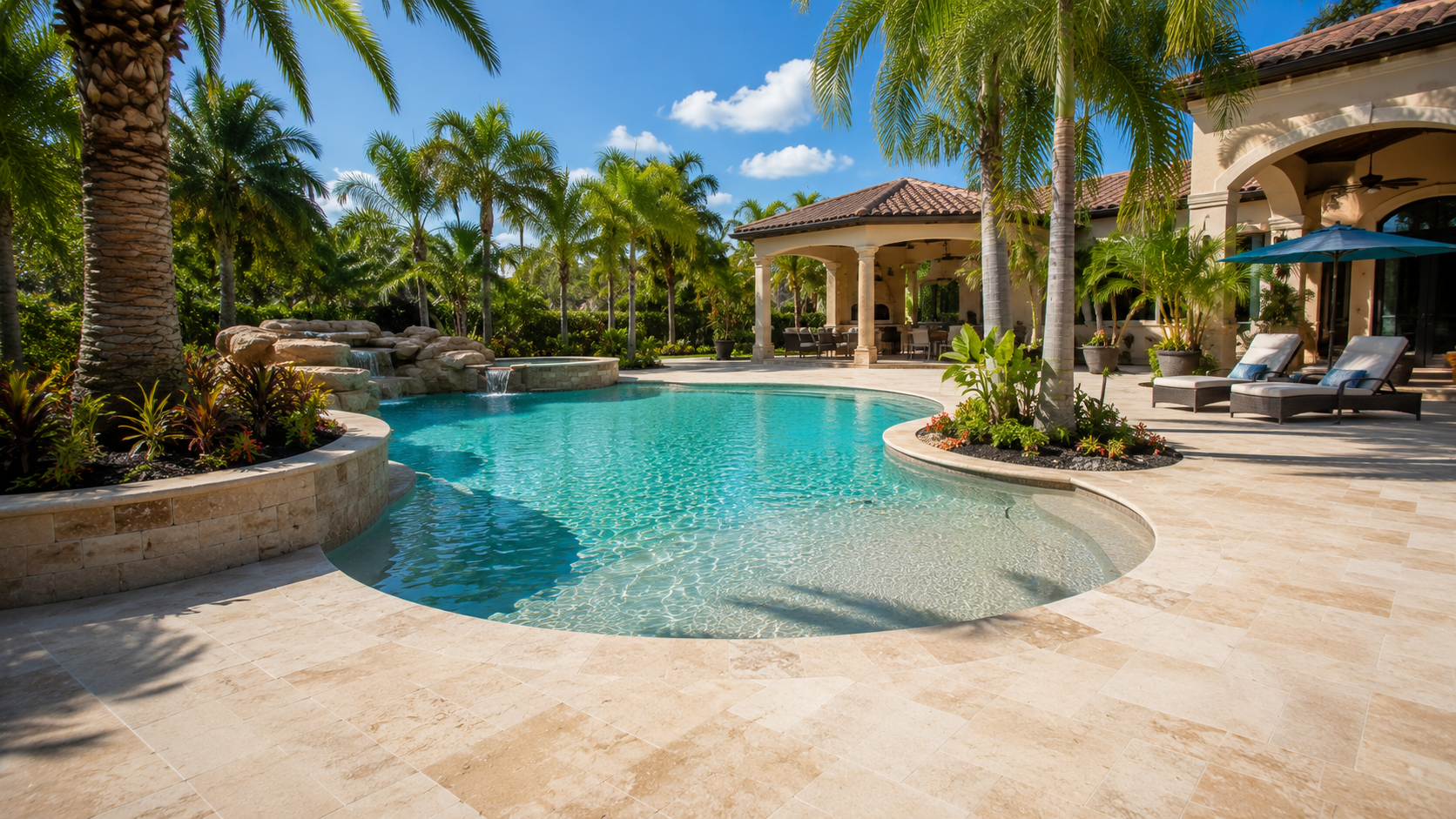
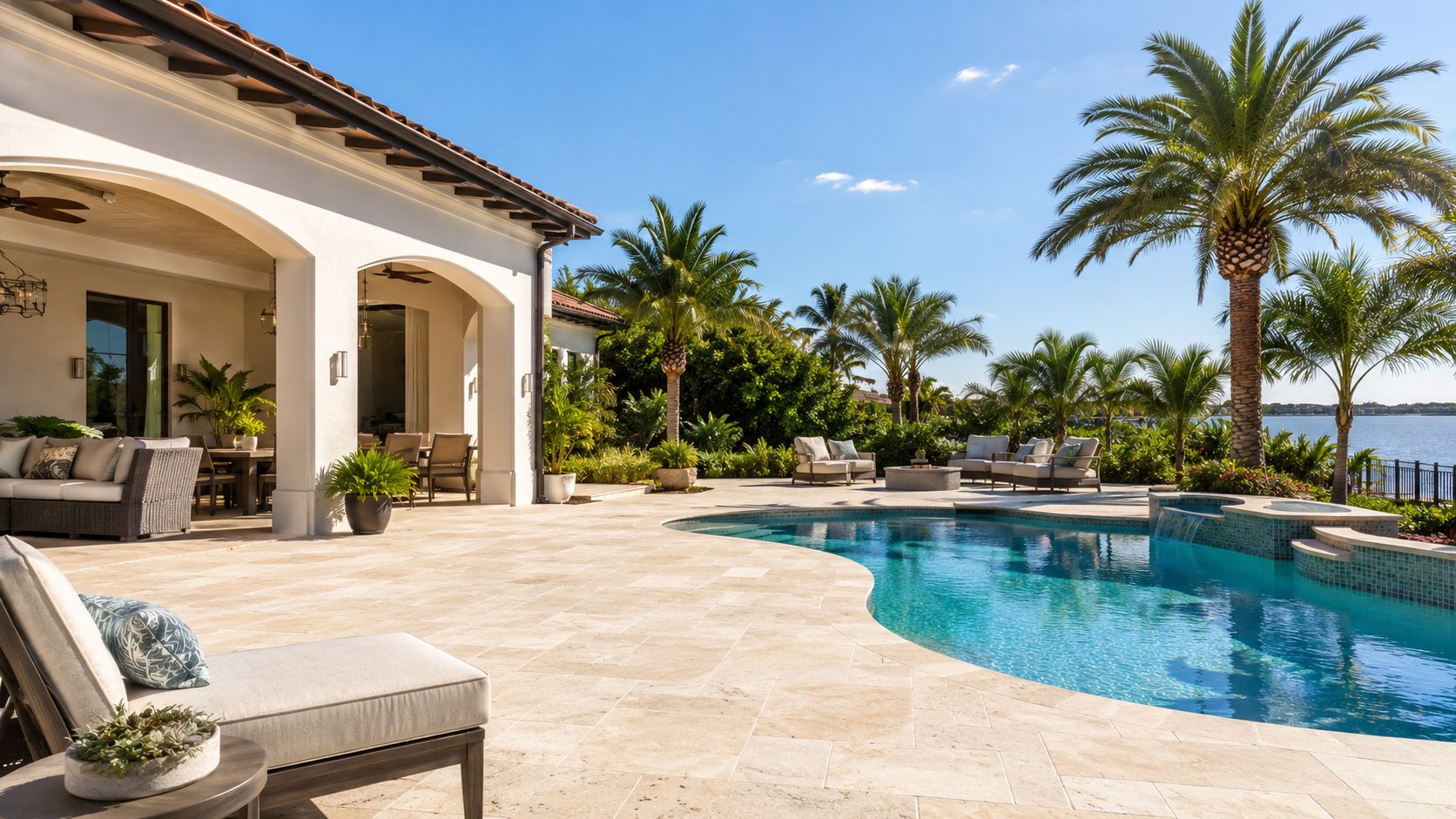
Travertine requires some specific considerations compared to concrete pavers when it comes to sealing. As a natural stone, travertine is more porous and somewhat softer than concrete, which means it needs the correct sealer formulation for natural stone (not all paver sealers are appropriate for travertine). The open-cell holes that are characteristic of travertine's natural finish should be allowed to remain open after sealing rather than being filled with sealer, which is why film-forming topical sealers are particularly problematic on travertine.
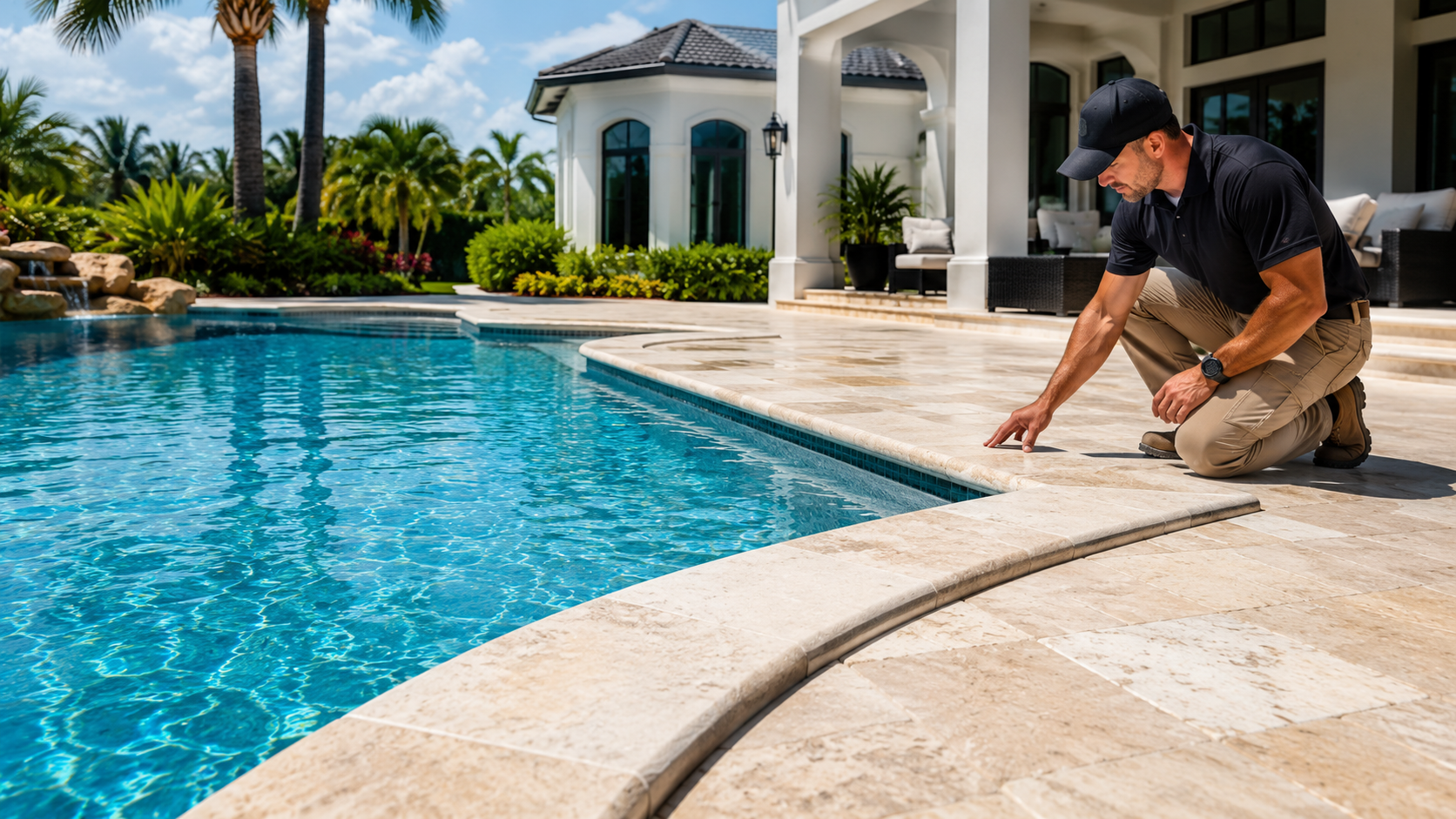
The slight texture and grout lines in a travertine pool deck also mean that cleaning must be thorough before sealing, as any residue in the texture or joints will be sealed in and become a permanent feature of the surface. We recommend a professional cleaning and sealing service for travertine pool decks because the combination of the right process, the right chemistry, and experience with the material produces a noticeably better result than what most homeowners can achieve with general-purpose products.
When to Call a Professional Paver Sealing Service
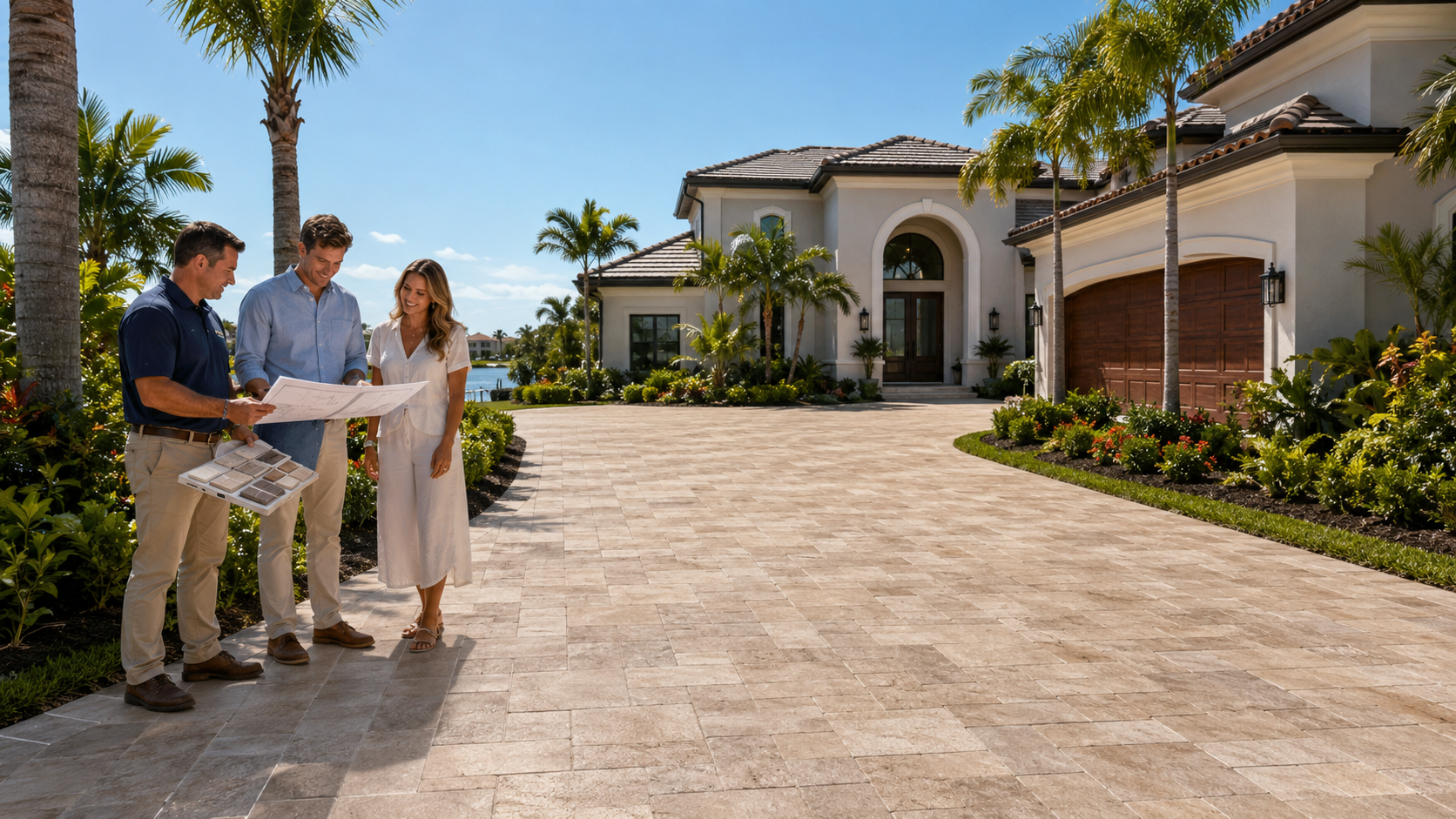
While the general process of sealing pavers is straightforward, several factors make professional application a significantly better choice for most Sarasota homeowners. Pool decks and large outdoor living surfaces require equipment and chemistry knowledge that produces a more even, more durable result than consumer-grade sprayers and store-bought sealers. A professional service also brings the experience to identify and address any surface issues, efflorescence, or joint problems before they are sealed in permanently.
If your pavers have never been professionally cleaned and sealed, if they show staining or discoloration that suggests the sealer has fully failed, if you have travertine or natural stone that requires specific product knowledge, or if your surface is larger than about 400 square feet, we strongly recommend professional sealing. The quality difference is visible and the protection delivered by a properly applied professional-grade sealer lasts measurably longer than most DIY applications.
Frequently Asked Questions
Q: How often should you seal pavers in Florida?
A: Most paver surfaces in Sarasota and Florida should be resealed every two to three years. Pool decks and high-traffic surfaces exposed to full sun and heavy chemical contact may need resealing every two years. The clearest indicator that resealing is needed is when water no longer beads on the surface.
Q: What is the best sealer for pavers in Florida?
A: A penetrating or impregnating sealer designed for your specific paver material (natural stone or concrete) is the best choice for Florida outdoor surfaces. Avoid film-forming topical sealers on pool decks, as they become slippery when wet and tend to peel in Florida's heat and UV conditions. Look for a sealer specifically formulated for Florida or tropical climates.
Q: Can you seal pavers yourself in Florida?
A: Yes, homeowners can seal their own pavers if the surface is in good condition and the project is smaller in scale. The critical steps are thorough cleaning, complete drying before application, and choosing the correct sealer type for your paver material. For travertine, natural stone, pool decks, and larger surfaces, professional sealing consistently delivers better and longer-lasting results.
Q: How long does paver sealing last?
A: A professionally applied penetrating sealer on outdoor pavers in Florida typically provides protection for two to four years depending on the level of traffic, sun exposure, and maintenance. The sealer does not fail all at once but gradually wears through from foot traffic and UV exposure. Water beading behavior is the most reliable indicator of when resealing is needed.
Professional Paver Sealing in Sarasota -- Get a Quote
Preferred Pools and Pavers provides professional paver cleaning and sealing services across Sarasota, Bradenton, Venice, and the surrounding Gulf Coast area. We use commercial-grade equipment and professional sealer products that are specifically selected for Florida's climate conditions and your specific paver material.
A professional seal on your travertine pool deck, paver patio, or driveway protects your investment and keeps your outdoor surfaces looking sharp for years. Contact us to schedule a free assessment.
Schedule your free consultation today.
Call us or use our online form to request your no-obligation estimate.